Modi in New Zealand after 40 Years, Announces Strategic Partnership

Indian Prime Minister in New Zealand after Four Decades: 18 Decisions in Modi-Luxon Meeting, Relations Reach 'Strategic Partnership'
In the Modi-Luxon meeting in Auckland, India-New Zealand relations elevated to strategic partnership. The 'Roadmap 2030' was announced, with 18 decisions and a target to double trade.
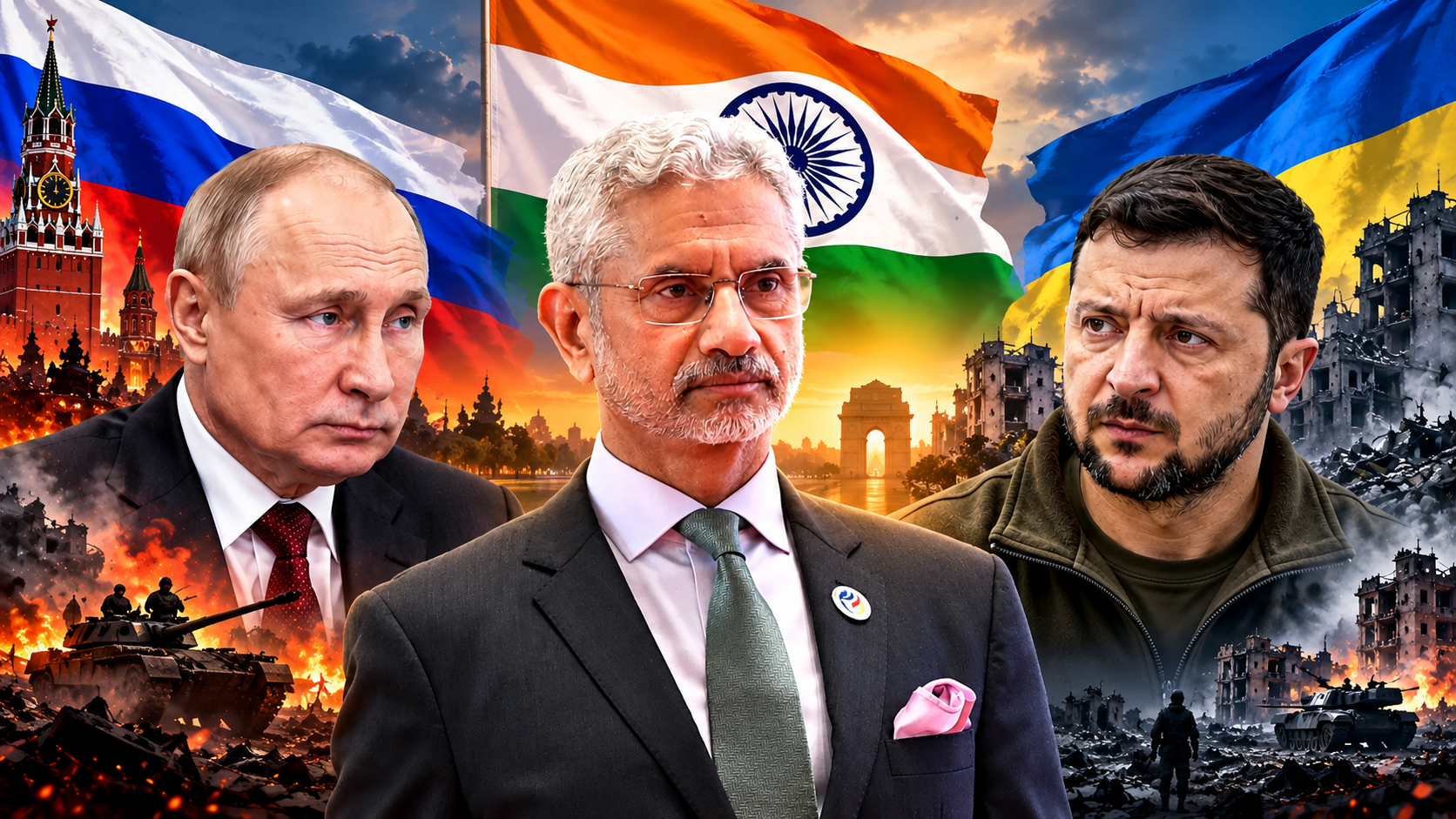
After a long 40 years, the relationship between the two countries has officially been elevated to 'strategic partnership' during the visit of an Indian Prime Minister to New Zealand. On Saturday, at Government House in Auckland, Prime Minister Narendra Modi and New Zealand Prime Minister Christopher Luxon announced the 'Roadmap 2030'— a comprehensive outline covering trade, defense, maritime security, counter-terrorism, agriculture, and education. A total of 18 decisions were announced from the meeting, including 10 agreements and memorandums and 8 policy declarations.
Modi arrived in Auckland on Friday night. On Saturday morning, he was welcomed in the traditional Maori 'Pohiri' ceremony at Government House. Accepting the 'Wero' (formal challenge) from the New Zealand Defense Force, he inspected the Guard of Honor with Luxon. The bilateral meeting at the representative level then commenced.
The main decision from the meeting is to double the amount of bilateral trade to NZD 7 billion (approximately INR 35,000 crore) by 2030. This target is based on the free trade agreement (FTA) signed in April this year.
In defense and security, the two countries have decided to initiate an annual 'Maritime Security Dialogue'. New Zealand is joining India's Indo-Pacific Oceans Initiative (IPOI) maritime security pillar. A maritime cooperation agreement, a memorandum regarding hydrography and nautical cartography, and a mutual logistics support agreement have been signed— under which the forces of both countries can use each other's bases and infrastructure for fuel replenishment, repair, and supply of logistics when needed.
A joint task force is being formed for counter-terrorism, through which regular discussions and intelligence sharing will take place. A memorandum of understanding has been signed between India's National Disaster Management Authority (NDMA) and New Zealand's National Emergency Management Agency.
However, there was a discrepancy in the statements of the two Prime Ministers regarding a condition of the FTA. Modi referred to the condition regarding the New Zealand government's role in 'promoting' private investment in India as a 'commitment' in his speech and mentioned USD 2 billion in private investment over 15 years. But according to a report by New Zealand media RNZ, Luxon avoided this explanation and stated that there is no financial commitment in that roadmap and it does not create any legally binding obligation.
On Saturday afternoon, Modi addressed a gathering of expatriate Indians at Spark Arena in Auckland. He said, “It took 40 years for an Indian Prime Minister to come to New Zealand. It will not take another 40 years, this is Modi's guarantee.” Referring to the Maori word 'Waka', he said it is not just a boat, but a symbol of moving forward together.
Outside the venue, however, protests also took place. RNZ reported that Modi supporters and protesters faced each other on either side of police barricades. Among the protesters were members of anti-immigration groups and about a dozen Khalistani supporters. When asked about the protests, Luxon stated that he did not see any protesters and was not concerned.
Notably, New Zealand's Foreign Minister Winston Peters was not present at the meeting— he was on a visit to Singapore and Japan at that time. From India's side, National Security Advisor Ajit Doval and Foreign Secretary Vikram Misri were present.
This is the first visit of an Indian Prime Minister to New Zealand since Rajiv Gandhi's visit in 1986. Recent momentum came after Luxon's visit to India in March 2025, when discussions on the free trade agreement began and a series of agreements were signed regarding defense, education, customs, horticulture, and sports.
According to the FTA signed in April this year, once fully effective, 95% of New Zealand's export products to India will see a reduction or elimination of tariffs; 57% of products will receive duty-free benefits from day one. In the fiscal year 2024-25, the volume of goods trade between the two countries was approximately USD 13 billion, nearly 49% higher than the previous year.
A significant portion of New Zealand's population is of Indian descent— according to the Indian government, the number is around 300,000. Elections are scheduled in New Zealand in November. Political observers believe that Luxon wants to present the FTA and this visit as a major success of his foreign policy, although it is still unclear how much impact it will have on the elections.